

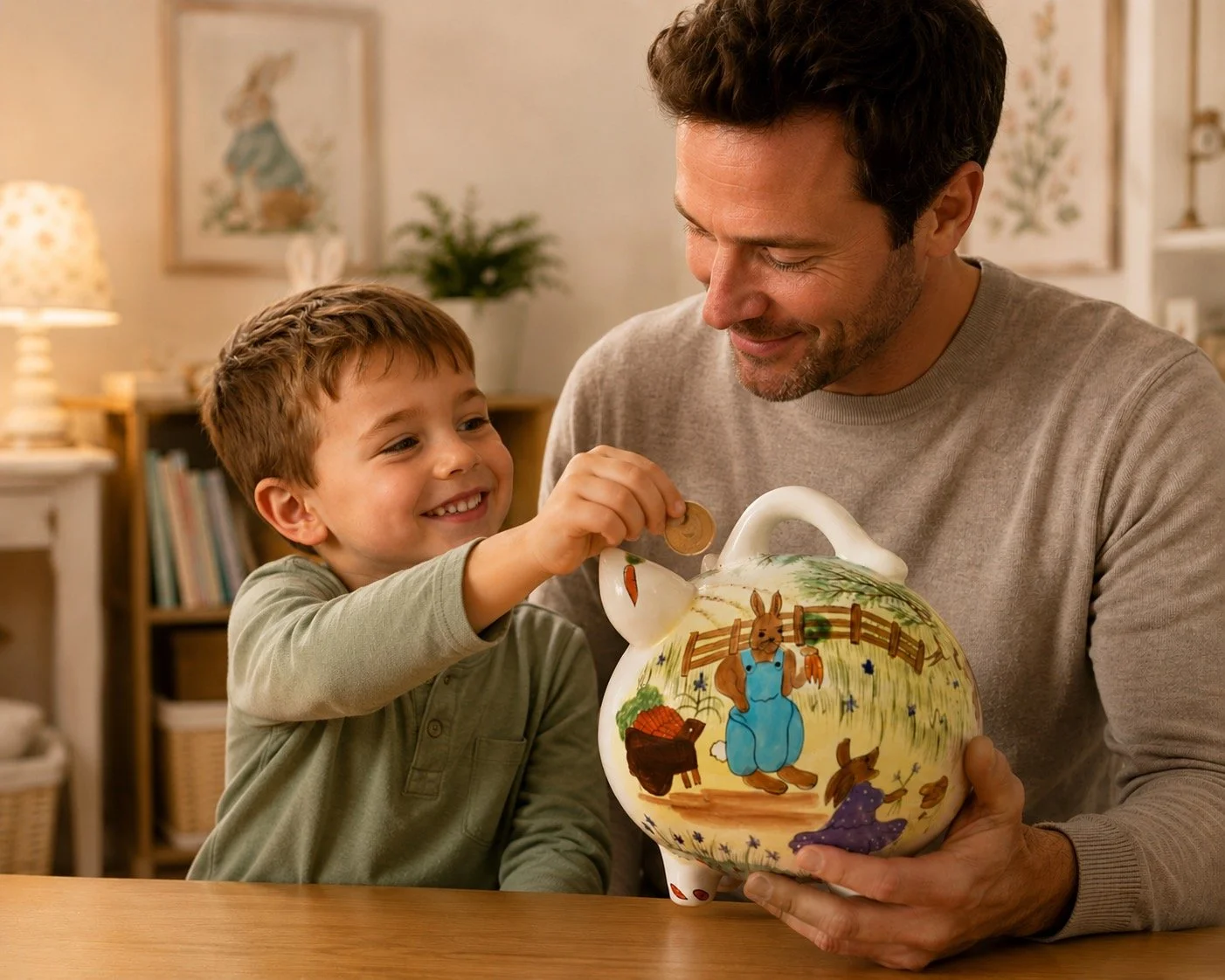
The best way to teach children to save money is to make saving fun, visible, and rewarding. Children learn financial habits much more effectively when they can physically see their savings grow and understand what they're saving for. 7 ways to teach kids to save money 1. Start with a piggy bank Give children their own piggy bank and encourage them to deposit coins regularly. Make it a fun ritual every week. 2. Set a savings goal Help children choose something special, such as a toy, bicycle, or book. Having a goal teaches patience and the value of saving 3. Teach the Save, Spend, Give method Divide money into three categories: saving for the future, spending on something enjoyable, and giving to help others. 4. Make saving a family activity Count coins together every month. Children enjoy seeing how much their savings have increased. 5. Match their savings. Offer to contribute 25 or 50 cents for every dollar they save. This introduces the idea of earning rewards for saving. 6. Let children make spending decisions. Allow them to purchase small things with their own money. They'll begin understanding the difference between wants and needs. 7. Celebrate milestones. When a child saves their first $10, $25, or $100, recognize the accomplishment. The reward can simply be praise or a special family activity. How to teach saving at different ages Age Best approach 3–5 years Drop coins into a piggy bank and learn to recognize money. 6–8 years Set small savings goals and count money together. 9–12 years Introduce allowances, budgeting, and saving for larger purchases. 13–17 years Open a youth savings account with parental guidance and introduce interest and long-term goals. A fun savings challenge for kids My Piggy Bank Savings Challenge An interactive 10-week challenge to show children how small amounts add up. Weekly savings amount $2
Best Way to Teach Kids to Save
Previous
Previous